How to Display Flowers & Greenery in Antique Vases and Vessels
Fresh flowers and greenery have a way of changing a room almost immediately. A handful of stems cut from the garden, a leafy branch or just a few flowers in an old jug can soften an interior and bring something of the season indoors.
Antique vessels are particularly well suited to these informal arrangements. Old French pottery, stoneware jugs, confit pots and everyday household pieces have shapes, colours and surfaces that sit naturally alongside flowers and foliage. They also encourage us to look beyond the traditional vase and use pieces already displayed around the home in a different way.
At La Maison de Belasyse, what we bring indoors changes continually with the garden. Summer flowers gradually give way to seed heads and autumn foliage, while branches and evergreen greenery can be gathered for much of the year. The principle remains much the same: use what is growing, and allow both the vessel and the stems to retain some of their natural shape.
Look Beyond the Traditional Flower Vase

One of the easiest ways to make flowers or greenery feel at home in an interior is to choose a vessel that already belongs there.
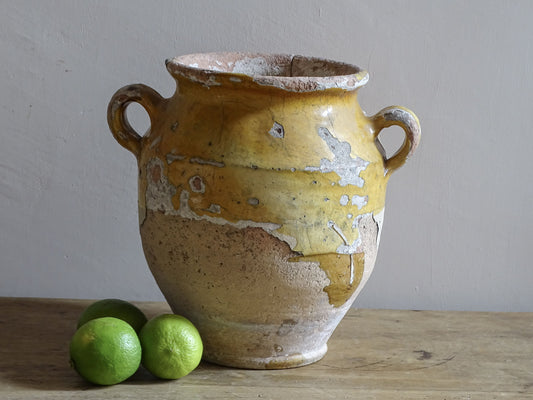
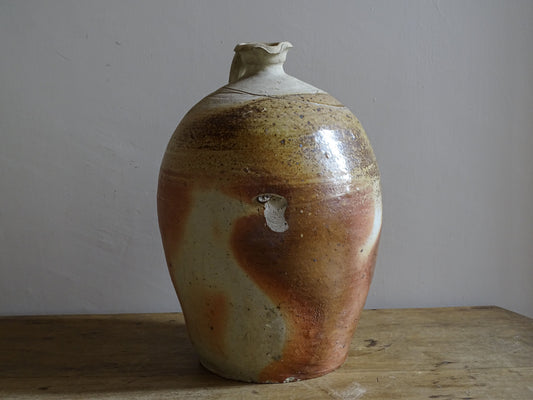
Antique pitchers and cruches are an obvious choice, particularly those with a neck narrow enough to support loose stems. Confit pots and other broad vessels can hold fuller arrangements, while small jugs and pots often need only a few flowers to bring them to life.
There is no need for the piece to have originally been intended as a vase. Old kitchen and household vessels can work particularly well because their practical shapes give arrangements a more relaxed appearance.
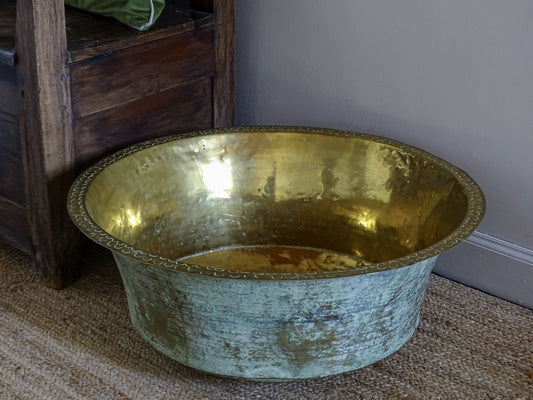
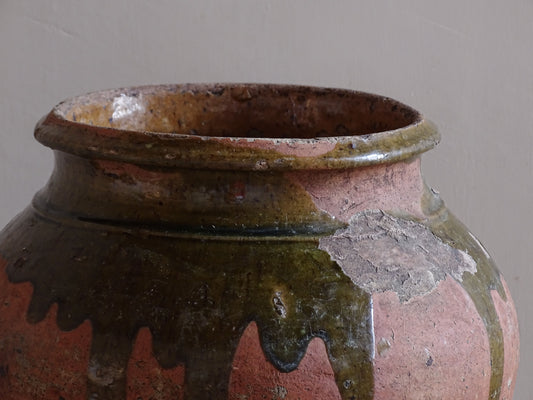
French pottery is especially versatile. Ochre and yellow glazes sit beautifully against green leaves and colourful flowers, while stoneware, terracotta and more muted glazes provide a quieter backdrop. Even a broad bowl or tian can be used in a completely different way when filled with loosely arranged foliage.
Explore our French Pottery Collection.
Use a Glass Jar Inside Antique Vessels

Not every antique vessel should be filled directly with water.
Older pottery may be porous or have fine cracks, repairs or areas of wear, and even pieces that appear sound may not be completely watertight. Our solution is very simple: we keep a collection of old glass jam jars specifically for arranging flowers inside antique pots and jugs.
The jars have attractive shapes and can be used as simple vases in their own right, but they are also particularly useful because they disappear neatly inside larger antique vessels. Choosing a jar that sits just below the rim means it is usually hidden completely once the flowers or foliage have been arranged.
It also makes everyday care much easier. The jar can simply be lifted out to change the water, trim the stems or remove flowers as they fade, without repeatedly filling or moving the antique piece itself.
Let the Shape of the Vessel Guide the Arrangement

Rather than beginning with a particular bouquet and searching for something to put it in, it can be easier to start with the vessel.
A tall stoneware jug lends itself naturally to long stems and branches. A broad confit pot can take a fuller arrangement, while small pitchers are often at their best with only a few flowers. Wide bowls and tians allow foliage to spread and fall much more freely.
The proportions do not need to be precise. In fact, slightly irregular arrangements often sit more comfortably with antique pottery than something perfectly symmetrical.
Fine stems and light foliage can create height and movement, while shorter or sturdier flowers work particularly well in broader pots. The aim is not to force the same style of arrangement into every vessel, but to allow its shape to suggest what will work.
A Few Garden Flowers Can Be Enough

A few stems are often enough, particularly in a smaller antique pot.
Flower arrangements do not have to be elaborate.
Some of the most successful are simply a handful of whatever happens to be flowering in the garden. Using one variety can be particularly effective, especially when the stems naturally sit at different heights or the flowers are at different stages of bloom.
Alternatively, a few flowers can be mixed with herbs, light foliage or seed heads to give the arrangement a little more shape without turning it into a formal bouquet.
This looser approach works particularly well with antiques. Irregular stems feel comfortable beside worn pottery, old linen, natural wood and objects that have acquired their own marks with age.
It also means that flowers can continue to be brought indoors even when the garden is producing only a handful of blooms rather than enough for a large arrangement.
Greenery Can Be Just as Effective as Flowers

Flowers are only part of the picture. Greenery can be just as decorative and is often even easier to live with.
Laurel grows in abundance in our garden, so it has become our go-to greenery throughout the year. Its long branches and glossy leaves work particularly well in larger antique pots, either arranged upright or allowed to fall more loosely according to the shape of the vessel.
A single leafy branch can have as much presence as a complicated bouquet, particularly in a room containing larger pieces of furniture, paintings or architectural details. Garden foliage, herb stems and branches with interesting shapes are all worth trying.
The same idea carries naturally into autumn and winter. Fresh flowers can gradually give way to autumn leaves, seed heads, dried stems, bare branches and evergreens as the garden changes.
This is one of the reasons antique vessels are so useful throughout the year. The same pot might hold flowers in summer, leafy branches at another point in the season, and sit empty as a decorative object in between.
Think About the Room as Much as the Arrangement

Flowers and greenery tend to look most natural when they feel like part of the room rather than something added purely as decoration.
Before choosing where to place an arrangement, consider the colours, heights and objects already around it. A tall branch might fill the space beside a painting or mirror. A small pot of flowers can soften a stack of books or a table. A broader vessel can give a console or mantel enough presence without needing many other objects around it.
The flowers themselves do not need to match the room exactly. A small amount of brighter colour can be particularly effective against worn pottery, faded paint, old wood and other quieter antique surfaces.
It is also worth stepping away from the arrangement and looking at it as part of the whole room. What looks beautiful in close-up does not always have the same balance when seen from further away.
Use Different Scales Around the House
Not every room needs a large display.
A generous pot of flowers can work beautifully on a mantel, dining table or console, while elsewhere a few stems or a single branch may be enough. Varying the scale makes flowers feel as though they have simply been gathered and placed around the house rather than styled as a matching set.
A small pot in the kitchen, several larger vessels grouped together on a mantel and a leafy branch on a table can all coexist without using the same flowers or the same type of pottery.
It is also a useful way of working with whatever the garden provides. Some weeks there may be enough flowers for several arrangements; at other times, a few stems of foliage may be all that is needed.
Bringing the Garden Indoors Through the Seasons
Perhaps the nicest thing about using flowers and greenery in antique vessels is that the arrangements never stay quite the same.
What is available in the garden changes from week to week, and the vessels change with it. Summer flowers give way to foliage, seed heads and branches, while the same old pots and jugs take on a slightly different character with each season.
There is no need for complicated flower arranging or a large collection of purpose-made vases. Often an old French pot, a glass jar hidden inside it and a few stems brought in from the garden are more than enough.
Explore our collection of antique French pottery, including old jugs, confit pots and other vessels for flowers, foliage or simply displaying as they are.