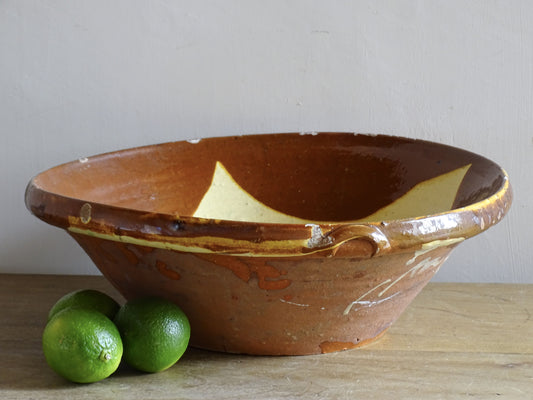
Spanish Antique Fajalauza Pottery from Granada
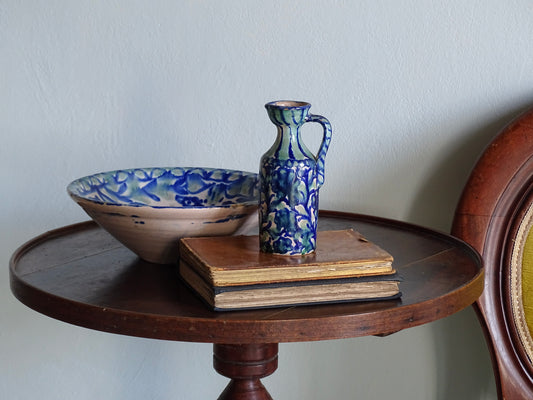
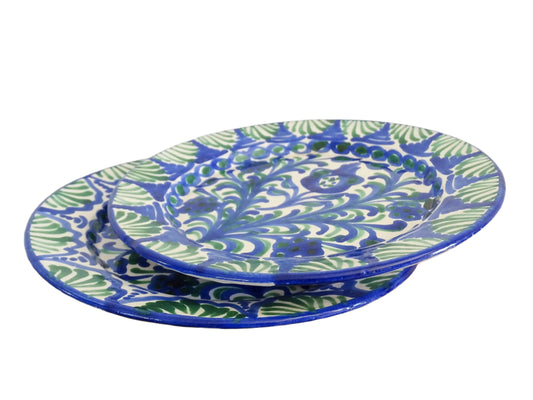
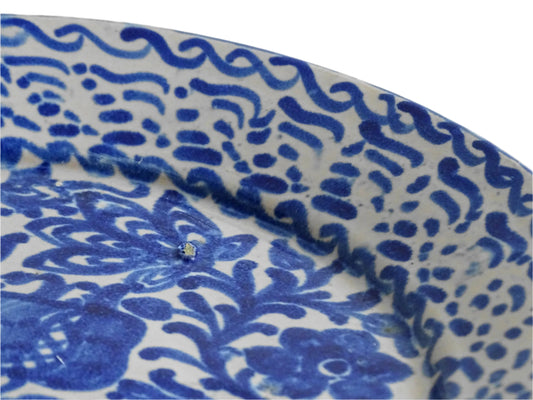
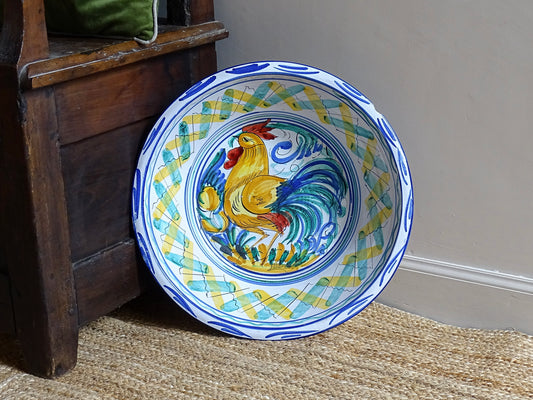
Antique Fajalauza pottery brings the distinctive colours and relaxed pattern of southern Spain into the home. Hand-painted in shades of cobalt blue and green, its bowls, plates and lebrillos work particularly well as decorative wall pieces, displayed on open shelving or placed on a table or console.
The generous scale of a traditional lebrillo can make it a striking focal point, while smaller bowls, plates and jugs are easy to layer with rustic wood, terracotta, antique textiles and other collected ceramics. Each piece is slightly different, with loose brushwork, variations in the glaze and signs of its earlier domestic use.
Our collection includes individually sourced antique and vintage Fajalauza pottery from Granada, chosen for its form, decoration and decorative presence.
Shop all of our Fajalauza pottery.
Decorating with Antique Fajalauza Pottery
As wall decoration
Large lebrillos and plates can provide pattern and colour above a console, fireplace, dresser or dining table. Check the individual listing for existing hanging holes, fittings or display recommendations.
On shelves and furniture
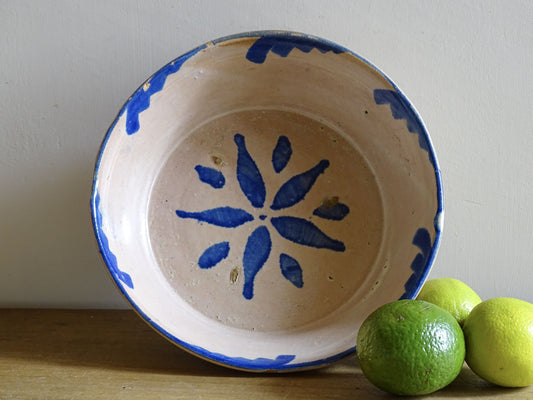
Smaller bowls can be leaned against the back of shelving, while jugs and deeper bowls work as individual objects among books, wood, terracotta and neutral pottery.
As a table or console centrepiece
A wide lebrillo can be left empty so that its painted interior remains visible, rather than being treated purely as a serving bowl.
Buying Guide
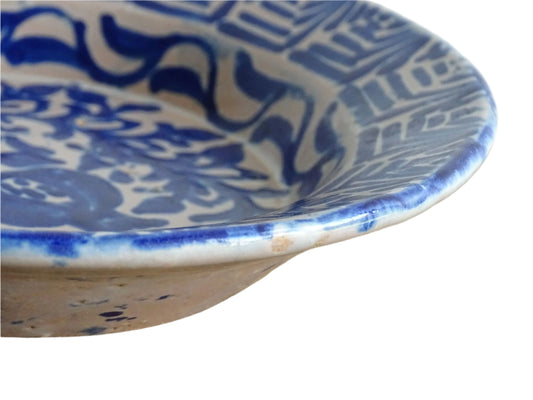
When choosing antique Fajalauza pottery, look closely at the shape, scale, painted decoration and overall condition of each piece. Variations in brushwork, glaze, colour and firing are part of its handmade character, while small chips, rim wear and historic repairs are common in older examples and should be considered alongside the decorative appeal. Larger lebrillos and unusual motifs are often especially sought after, but smaller bowls, plates and jugs can be easier to place on shelves, tables or walls. We provide detailed photographs, measurements and condition notes for every piece so that you can choose one that works both visually and practically in your home.
Antique Fajalauza pottery is generally priced higher than modern pieces because of its age, rarity, individual decoration and surviving condition. Larger lebrillos, unusual motifs, strong early colour and well-preserved examples can command particularly high prices, while historic repairs or wear may affect value without necessarily reducing decorative appeal. Modern Fajalauza can offer a more accessible way to enjoy the style, but antique pieces have the added character of age, use and variation, making each one a more individual and collectible object.
The Origins of Fajalauza Pottery
Antique Fajalauza pottery is closely tied to daily life in Granada. Produced for ordinary domestic use, these ceramics were shaped to work hard rather than to impress. Bowls, plates, and basins moved easily between kitchen, courtyard, and table, their painted surfaces slowly altered through years of handling.
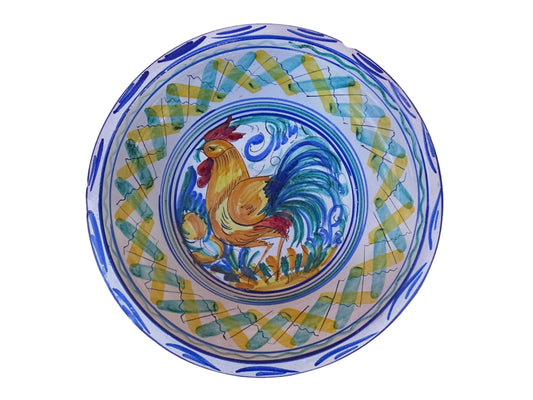
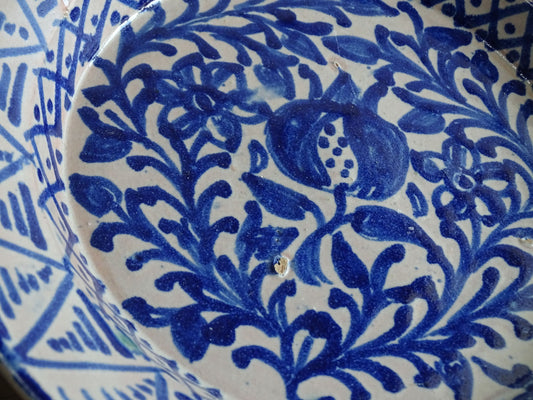
The style is immediately recognisable. Soft white or cream glazes are decorated by hand in shades of blue and green, often featuring birds, foliage, or the pomegranate, a symbol long associated with the city of Granada. The brushwork is loose, the glaze uneven in places, and the result is work that feels instinctive rather than ornamental.
Fajalauza pottery takes its name from the neighbourhood in Granada where workshops have existed for centuries. The visual language of these ceramics reflects the region’s layered history, shaped by Spanish and Moorish influences and passed down through repetition rather than formal design.
As part of the wider tradition of Granada ceramics, antique Fajalauza pieces were never intended as decorative objects. They were made to be stacked, carried, washed, and used daily. The signs of wear visible today are not flaws but evidence of that use.
Each piece carries small variations, a reminder that antique Spanish pottery was made by hand and in volume, without the expectation of uniformity.

Form, Scale and the Lebrillo
One of the most familiar forms in antique Fajalauza pottery is the lebrillo, a wide, shallow bowl traditionally used for food preparation. Its generous proportions and simple shape allowed it to serve many purposes within the home.
Today, antique lebrillos are often appreciated for their presence rather than their function alone. Their scale allows the decoration to sit comfortably within a space, whether placed flat on a surface or displayed upright. The painted motifs remain readable without feeling dominant, particularly when paired with natural materials such as wood, stone, or plaster.
Smaller bowls and plates share the same qualities, practical forms, softened surfaces, and decoration that feels secondary to shape.


Enduring, Everyday Objects
What gives antique Fajalauza pottery its lasting appeal is not decoration alone, but the balance between use and making. These were everyday objects, shaped by routine and repetition, and marked by the lives they passed through.
As part of a long-standing ceramic tradition in Granada, they continue to feel relevant because they remain grounded, practical, and honest in their construction.
Looking for a particular Fajalauza piece?
Join our mailing list to hear when newly sourced Fajalauza bowls, lebrillos, plates and jugs are added to the collection. You will also receive 10% off your first order.