Decorating with Antique French Confit Pots and Vintage Pottery
Antique French confit pots are among the easiest pieces of French country pottery to decorate with. Their rounded terracotta forms, warm yellow and green glazes, and worn surfaces bring texture and depth to a room without feeling overly formal.
Originally made for everyday use in the south of France, confit pots now work beautifully as decorative pieces in kitchens, dining rooms, living spaces and garden rooms. They sit naturally with old wood, stone, plaster, copper, linen and other collected ceramics, which makes them especially useful in interiors that feel layered rather than overly arranged.
Whether displayed alone or grouped with other antique French pottery, a confit pot adds warmth, age and quiet character to a space.
Browse antique French confit pots sourced in France.

Why antique French confit pots work so well in interiors
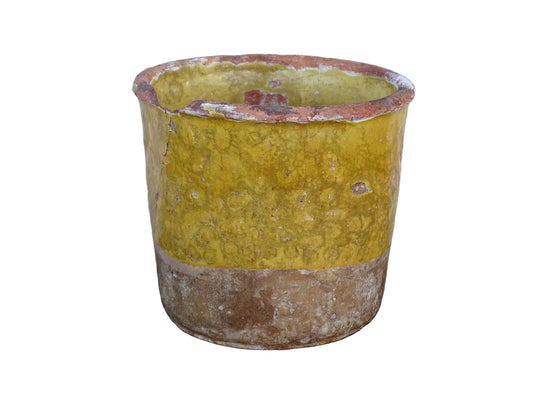
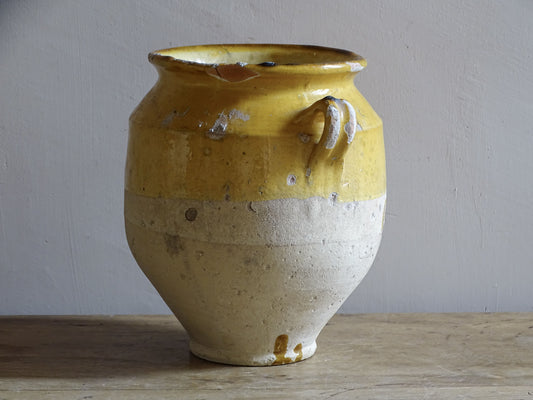
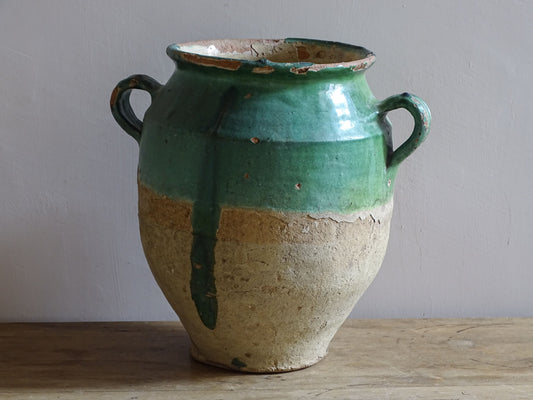
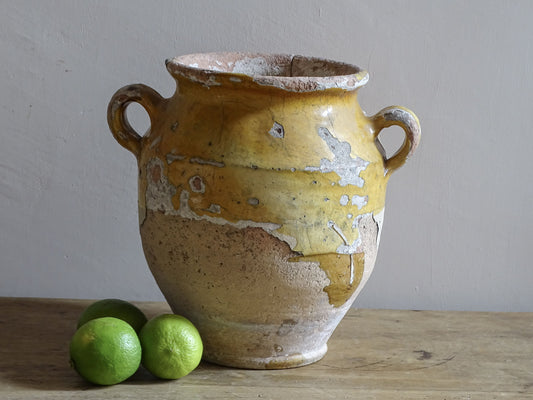
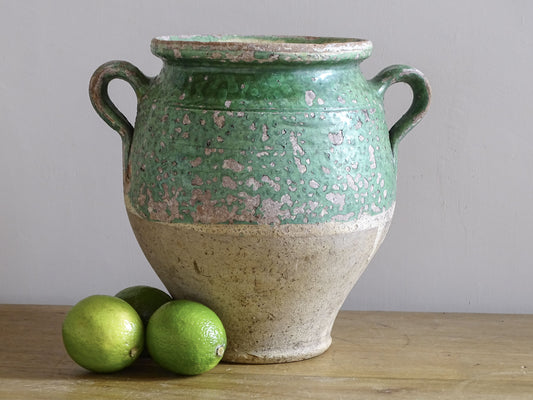
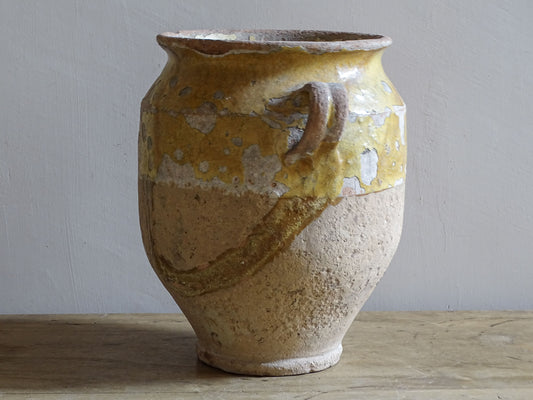
The appeal of an antique French confit pot lies in its balance of colour, shape and surface. The lower part is usually left as unglazed terracotta, while the upper section often carries a honey, ochre, mustard yellow or green glaze. This contrast gives the pot a strong decorative presence, even when it is empty.
Their rounded bodies, small side handles and uneven handmade surfaces make them easy to place in both rustic and more refined interiors. A single pot can soften a kitchen shelf or console table, while a larger group can create a striking collection of antique pottery.
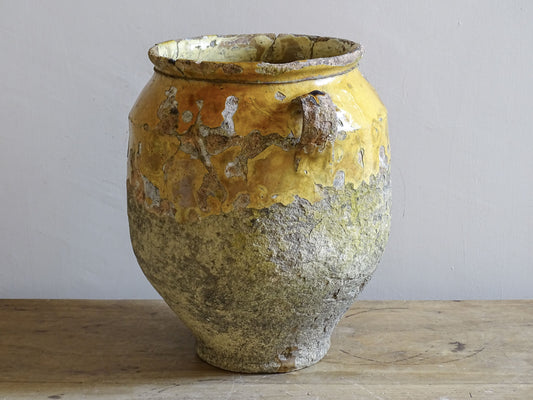
Because they were practical objects before they became decorative ones, confit pots have a grounded quality. Chips, glaze wear, age marks and irregularities are part of their appeal, giving each piece a surface that feels collected over time.

How to decorate with antique French confit pots
In a kitchen, an antique confit pot can be used as a decorative vessel for wooden spoons, dried herbs or simple branches. It also works well on open shelving, especially when placed beside antique copper, cutting boards, ironstone, rustic bowls or French earthenware.
On a dining table or sideboard, a confit pot can act as a relaxed centrepiece. It does not need to be overfilled. A few stems, seasonal greenery or even an empty pot with a beautiful glaze can be enough.
In a living room, confit pots are useful for adding warmth to mantels, shelves, consoles and corners that need texture. Their earthy terracotta bases sit particularly well against stone, limewashed walls, painted furniture and natural wood.
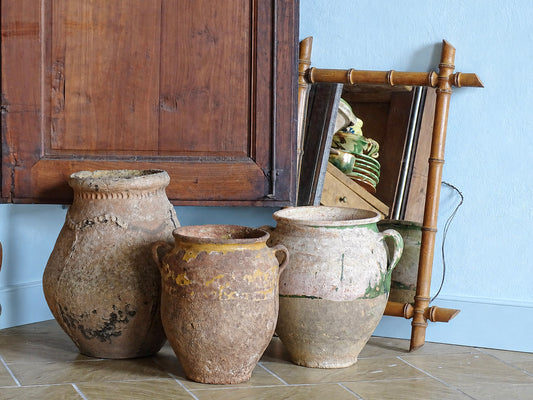
Larger confit pots can also be placed on the floor, beside a fireplace, under a console or in a garden room. Their scale gives weight to a space, especially when paired with baskets, old wooden stools, architectural pieces or other large rustic pottery.

Grouping confit pots with vintage pottery
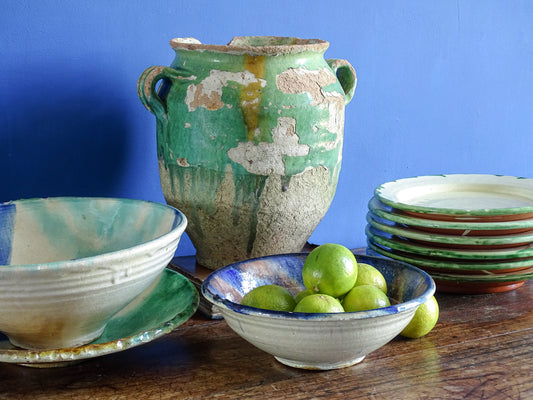
Antique French confit pots are especially effective when grouped with other forms of vintage pottery. They do not need to match. In fact, the most natural displays often come from mixing different shapes, glazes and finishes.
Try pairing a yellow-glazed confit pot with a rustic tian, a glazed jug, a stoneware storage jar or a simple earthenware bowl. The connection comes through material and age rather than symmetry.
A small group of pottery can work well on a dresser, kitchen shelf, farmhouse table or open cupboard. Varying the height and width of the pieces helps the display feel collected rather than staged.
For a more Mediterranean feel, combine confit pots with terracotta, Spanish pottery, olive jars, wrought iron and sun-washed textiles. For a French country look, place them with antique copper, old linen, bread boards, baskets and softly worn wood.

A short history of French confit pots
Confit pots were traditionally used in the south of France for preserving meat, particularly duck or goose, in fat. Their thick terracotta walls and glazed interiors made them practical storage vessels for kitchens and cellars before modern refrigeration.
They were made as everyday domestic objects, often by regional potteries using local clay. Because they were produced for use rather than display, variations in colour, form and glaze are common. Some are more rounded, some more tapered, and many show wear from years of handling.
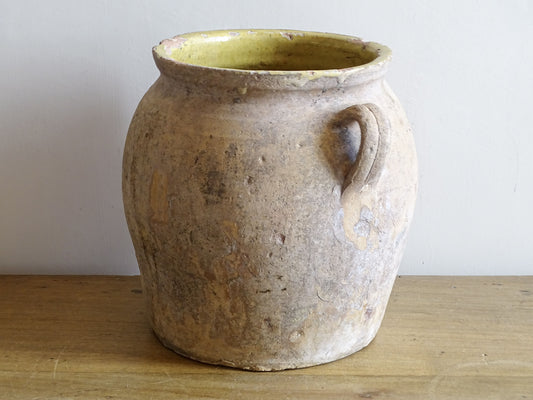
These signs of age are what make antique confit pots so appealing today. The softened rims, glaze losses, chips and surface marks are part of their working past, and help distinguish them from modern reproductions.
Choosing an antique French confit pot
When choosing a confit pot, consider where it will be used. A smaller pot is easy to place on a shelf, table or kitchen counter, while a larger one can become a focal point on the floor, beside a fireplace or on a console.
Colour is also important. Yellow and ochre glazes bring warmth and work beautifully with wood, copper and neutral interiors. Green-glazed confit pots can add a stronger decorative accent, especially in rooms with garden tones, painted furniture or other green ceramics.
Condition should be understood in relation to age and use. Antique confit pots often have chips, glaze wear, old repairs, surface marks or irregularities. For many collectors, these details are part of the appeal, but it is still worth checking each listing carefully, especially if the piece will be displayed prominently.
Living with antique French pottery
Antique French pottery brings a room back to natural materials: clay, glaze, wood, metal, linen and stone. Confit pots are particularly useful because they are decorative without feeling delicate. They can sit comfortably in everyday rooms, not just in formal displays.
Placed alone, a confit pot can bring warmth to a quiet corner. Grouped with other antique and vintage pieces, it can help create the layered, collected feeling associated with French country interiors.
Our collection of antique French confit pots is sourced individually in France, with each piece chosen for its form, glaze, surface and decorative presence.
Discover our French confit pots for sale or, explore our full French pottery collection.
Looking for a particular size or glaze?
Our stock changes as pieces are sourced individually in France. You can explore the current collection or join our mailing list for new arrivals.